Digital intelligence: what it means to life sciences marketers
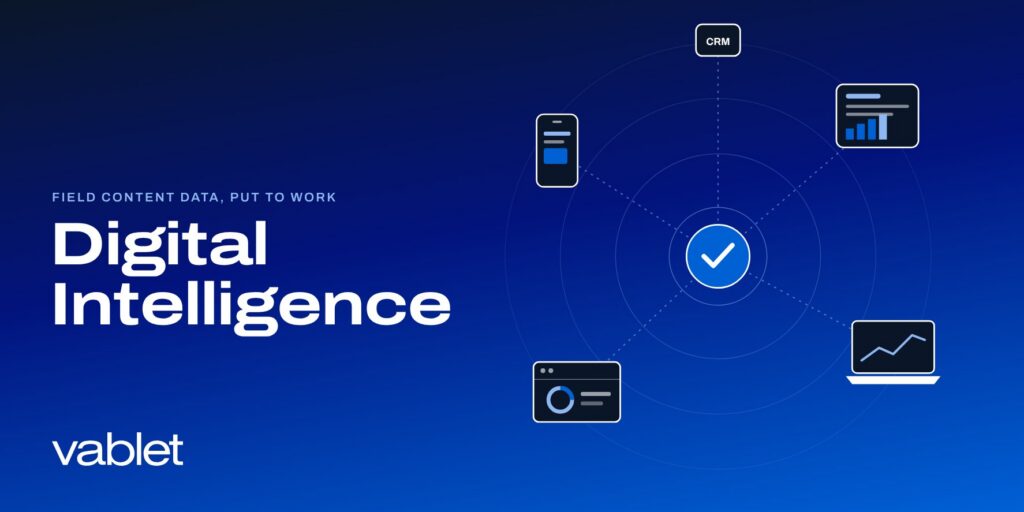
Digital intelligence is the practice of capturing what actually happens with your content, in the field and online, and turning it into decisions marketing and sales can act on. For life sciences marketers, that means knowing which approved materials reps use, which ones customers engage with, and what changes after they do.
Digital intelligence is not a dashboard, a data lake, or another AI tool bolted onto the stack. Those are parts. Digital intelligence is the loop: capture the signal, connect it to the systems that need it, and change what you do next because of it.
Key takeaways
- Digital intelligence is a loop: capture content and customer signals, connect them across systems, and act on them.
- In life sciences, the most valuable signals come from the field: what reps present, what customers read afterward, and whether every rep has the current approved version.
- Three requirements still apply: connected systems, timely and complete capture (including offline), and predictability.
- Governed content is the foundation. AI and analytics built on outdated content produce confident, wrong answers.
Updated October 2026. This guide refreshes an earlier vablet article on digital intelligence for today’s AI tools, compliance expectations, and field teams.
Why digital intelligence matters more in 2026 than it did five years ago
When we first wrote about digital intelligence, the conversation was about “Big Data” and whether marketers could keep up with it. The volume problem is solved. Every system now produces more data than anyone reads.
The problem in 2026 is different. Three things changed.
- Access to customers got tighter. Field time with clinicians, buyers, and hospital teams is shorter and harder to win. Every meeting has to count, and marketing needs to know what happened in it.
- AI made content cheap to produce. Teams can generate decks, leave-behinds, and training in minutes. That makes it far more important to know which content is approved, current, and actually working.
- Regulators still expect a record. In regulated industries, “we think the rep showed the right version” is not an answer. You need an audit trail of what was distributed, to whom, and when.
Digital intelligence sits where those three meet. It tells marketing what works, tells sales what to do next, and tells quality and compliance what was used.
What digital intelligence looks like in a field team
Most marketing analytics stop at the website and the inbox. The richest signal in life sciences sits further out: in the exam room, the cath lab, the distributor meeting, and the trade show booth. That is where approved content meets a real customer.
A field content platform with digital intelligence built in can answer questions like these:
| Question marketing asks | Signal that answers it | What you do with it |
|---|---|---|
| Do reps have the current version? | Which files each rep should have, and which they actually have on their device | Fix gaps before the next call, not after an audit |
| Which content gets used in meetings? | Files and pages presented, time spent per page, by rep and region | Retire what nobody uses, invest in what works |
| Does shared content get read? | Whether a shared file was opened, by whom, which pages, and for how long | Time follow-up to real interest |
| Is the meeting in the CRM? | Meeting start and end captured automatically and logged to Salesforce | Accurate activity data without asking reps to type |
| Are reps ready? | Training completion and content readiness in the same app reps sell from | Coach the gap, not the whole team |
Three requirements for digital intelligence
The three requirements we named years ago still hold. What it takes to meet them has changed.
1. Connected systems
Marketing data comes from many places: your content platform, your CRM, your marketing automation, your LMS, your website. If those systems do not share data, nobody sees the whole customer story.
In practice, that means content activity should flow into the CRM without a rep doing anything. A rep taps to start the meeting and taps to end it, and the activity lands in Salesforce. Marketing sees what was presented. Sales leadership sees it in the pipeline. Nobody re-enters anything.
2. Timely, complete capture
Data that arrives late, or only from reps with a good connection, leads to wrong conclusions. Field teams work in hospitals, basements, plants, and planes. If your platform only records activity when it is online, you are missing the meetings that matter most.
Good capture works offline, syncs when the device reconnects, and covers every device your reps use: phone, tablet, laptop, and browser. Complete beats clever. A simple, full record is worth more than a sophisticated partial one.
3. Predictability
The payoff of digital intelligence is seeing what comes next. When you know which content moves deals forward, which shared files get read, and which reps need support, you can act before a quarter slips.
This is where AI earns its place. AI can surface patterns across thousands of meetings faster than any analyst. But predictions are only as good as the content and the data underneath them. AI on top of ungoverned content just produces confident answers about the wrong version.
The foundation under all three: governed content
Digital intelligence measures content. If the content itself is out of date, the data describes a problem instead of solving one. In life sciences, outdated field content costs more than a missed opportunity. It can contribute to the kind of findings that lead to a CAPA (corrective and preventive action).
Governed content means approved materials are pushed to the right people, replaced versions update everywhere automatically, and expired files leave the field on time. Links, favorites, presentation folders, and QR codes keep working because they always point to the current version. Read more in content compliance for field teams.
How to start: a seven-step checklist
- List the questions you most want answered about your field content. Start with five.
- Map where each answer lives today, if anywhere.
- Confirm your content platform records activity offline and on every device your reps use.
- Connect content activity to your CRM so meetings log themselves.
- Check that every rep has the current, approved version of every file they need.
- Review usage monthly with sales leadership. Retire what nobody uses.
- Only then add AI on top, pointed at governed content and complete data.
Where vablet fits
vablet is a sales enablement platform built for regulated field teams. It delivers approved content to reps on phone, tablet, computer, and browser, online or offline. It knows which files each person should have, which they do have, what they did with them, and whether they shared them. For shared content, it shows whether it was viewed, by whom, which pages, and for how long. Meetings can log to Salesforce automatically, and training lives in a built-in LMS inside the same app reps sell from. vablet is SOC 2, ISO 27001, HIPAA, and GDPR compliant. See sales presentation and meeting analytics and the Salesforce integration.
What vablet is not: it is not a web analytics suite, a customer data platform, or a marketing automation tool. If your main goal is website attribution or email scoring, you need those tools too. vablet covers the part they cannot see: what happens with your content in front of the customer.
Frequently asked questions
What is digital intelligence in marketing?
Digital intelligence in marketing is the practice of capturing data about how content and customers interact, connecting it across systems, and using it to make better marketing and sales decisions. It covers the full loop, from capturing data to acting on it.
How is digital intelligence different from marketing analytics?
Marketing analytics usually reports on channels marketing owns, like the website and email. Digital intelligence connects those signals with field activity, CRM data, and content usage so teams can act on the whole customer picture, including what happens in face-to-face meetings.
Why does digital intelligence matter for life sciences companies?
Life sciences companies have limited time with customers and strict rules about what content reps can use. Digital intelligence shows which approved materials work in the field, confirms reps have current versions, and keeps a record of what was distributed, which supports compliance as well as performance.
Does AI replace digital intelligence?
No. AI is a tool that can find patterns in digital intelligence data faster. It depends on complete, accurate data and governed content. AI working from outdated content or partial data produces confident but unreliable answers.
What content data should field marketing teams track?
Field marketing teams should track which files reps have versus which they should have, which content is presented in meetings, time spent per page, whether shared content is opened and by whom, and whether meetings are logged in the CRM.
What is an example of digital intelligence in life sciences sales?
A medical device marketing team sees that reps present a new clinical summary in most surgeon meetings, but that surgeons rarely open the version shared by email afterward. The team shortens the shared version, adds a one-page highlights sheet, and tracks whether follow-up views increase. That loop of capture, connection, and action is digital intelligence.
Can digital intelligence work when reps are offline?
Yes, if the content platform records activity on the device and syncs it when the connection returns. Platforms that only capture activity online miss meetings in hospitals, plants, and other low-connectivity locations.
Turn field activity into marketing intelligence
The data you need to improve your content is already being created every time a rep opens a file in front of a customer. The question is whether you capture it. See what vablet records, and how it reaches your CRM, in a 20-minute demo.

vablet team
More from the vablet blog.

Content is still king. But speed, depth, and sharing win the crown.
Rich content is everywhere, but are your field teams sharing it fast enough? See how vablet closes t
Paul Pacun
From demand gen to revenue systems
Learn how revenue leaders are transforming demand generation into comprehensive revenue systems, ens
Paul Pacun
Turn completion into continuous onboarding with automated workflows
LMS plus Sales Enablement allows automated continuous training.
Paul PacunGet new posts by email
Field enablement, offline content, and compliance, written for the people who run it. No pitches.
Twenty minutes. Your content. Offline.
Bring one approved deck; we present it with the Wi-Fi off and show the record it leaves behind.
Live in weeks. No implementation fee. $25 per user per month, MSRP.